The PeopleSoft WAF bypass: one encoded letter
Attackers walked past web firewalls into Oracle PeopleSoft by URL-encoding one letter of the path. A firewall matches a string; the product proves the rule.
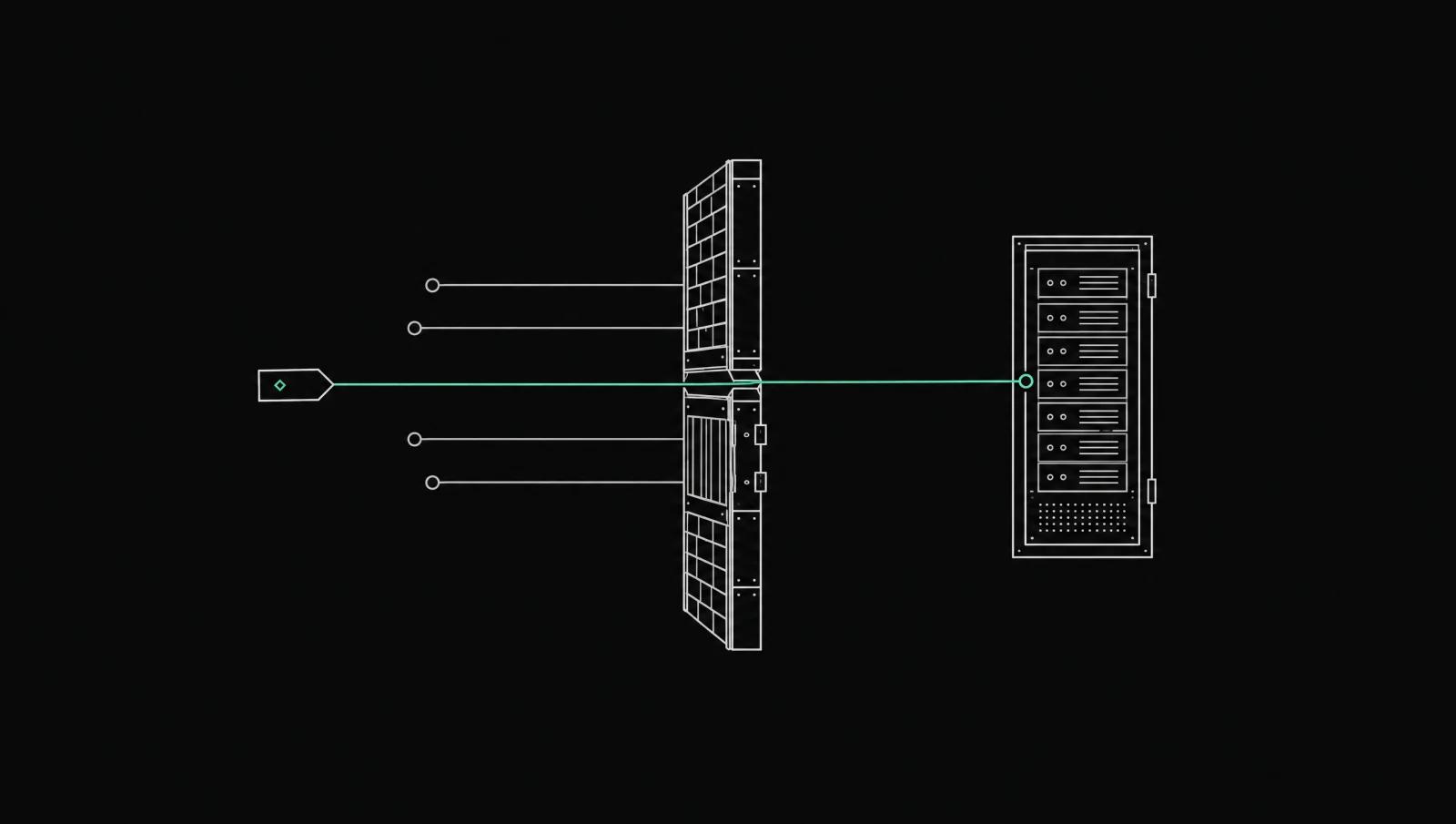
On 26 September 2026, Mandiant reported that the extortion group ShinyHunters had gone back to work on Oracle PeopleSoft. The flaw, CVE-2026-35273, is an unauthenticated bug in the Environment Management Hub that hands an attacker code execution on the server and, from there, the whole instance. It is rated 9.8 out of 10 and sits on the United States catalogue of vulnerabilities under active attack. The part worth your attention is not the bug. It is how the attackers walked past the firewalls meant to stop them: they changed one letter of the web address.
What happened
PeopleSoft's Environment Management Hub answers at the path /PSEMHUB/hub. It accepts data and turns it back into live objects without asking who is calling, a pattern known as unsafe deserialization, so a crafted request becomes code running on the server. Mandiant's report ↗ describes a first wave from late May, exploited before a patch existed, then a renewed campaign in September. The targets span higher education, healthcare, transportation and government, and the actors left web shells behind for credential theft and lateral movement. Oracle has issued a patch and an advisory ↗, and the flaw is on CISA's known-exploited catalogue ↗.
One letter past the firewall
By September, many targets had added a firewall rule to block requests to /PSEMHUB/. The attackers stopped sending them. They requested the encoded form /%50SEMHUB/, where %50 is the web-address code for the letter P. The firewall compared the raw text, saw no match, and let it through. The PeopleSoft server then decoded the address, read it as /PSEMHUB/, and served the vulnerable endpoint. Mandiant's guidance is blunt: assume any percent-encoded, mixed-case or otherwise non-normalized spelling of the path, and block on the decoded form.
A firewall matches the spelling of an attack. Only the product can be tested for the behaviour.MATT Research
The firewall was never the control
Mandiant puts it in one line: "WAF rules and path-based blocking are not a substitute for patching." A firewall rule is a guess at what an attack looks like, written as a string to match. It buys time, and teams are right to use it, but it covers only the spellings someone thought of. The control that actually closes CVE-2026-35273 is Oracle's patch, plus turning the Hub off where it is not needed. A team that added the rule and moved on had a green dashboard and an open door.
Your edge and your product disagree
The gap here is general. The thing at your perimeter, a firewall or a proxy, reads a request one way; the application behind it reads the same request another way, after decoding and its own routing. Every place those two readings differ is a place an exploit can live, and edge rules cannot close a gap the edge cannot see. It is the same lesson as why a once-a-year test misses what ships weekly: a control that lives away from the running product measures a proxy for safety.
The rule and the check
Turned into ExploitOps, this is one rule with a check that runs against the live product. Declare: the Environment Management Hub is unreachable from outside, by any spelling of its path. Observe: list every route the application decodes and serves, and mark where the edge and the app read a request differently. Prove: send the blocked path and its encoded, mixed-case and doubly-encoded variants, and confirm the product itself refuses each one, on every release. Fix: apply Oracle's patch, disable the Hub where it is unused, and rotate the credentials the web tier can read. Remember: keep the check, because the next bug will hide behind a different spelling. A rule like this is written in plain English and re-proven every release, and the shape it belongs to lives in the attack library. MATT has no PeopleSoft to defend; the method is the point, and it holds for any product with a firewall in front of it.
Questions
What is CVE‑2026‑35273?
It is a critical flaw in Oracle PeopleSoft Enterprise PeopleTools, in the Environment Management Hub, that lets an unauthenticated attacker run code on the server and take over the instance. It is rated 9.8 out of 10 and is being exploited in the wild. Oracle has released a patch.
Am I affected?
PeopleTools 8.61 and 8.62 are confirmed affected, and older, unsupported builds should be treated as vulnerable too. If your PeopleSoft exposes the Environment Management Hub at /PSEMHUB/hub to the network, assume you are in scope until you have patched and reviewed your logs.
Is a firewall rule enough to stop it?
No. Attackers bypassed path-blocking rules by URL-encoding a letter, requesting /%50SEMHUB/ in place of /PSEMHUB/. Mandiant is explicit that firewall and path-based blocking do not replace patching. Apply Oracle's fix and disable the Hub where it is not needed.
What should we do right now?
Apply Oracle's patch for CVE-2026-35273. Disable the Environment Management Hub in multi-server setups, or remove the PSEMHUB application in single-server ones. Search logs for requests to /PSEMHUB/ and any encoded variants, and rotate the credentials the PeopleSoft web tier can read.
Has it actually been exploited?
Yes. Mandiant attributes the campaign to the extortion group ShinyHunters, tracked as UNC6240, first as a zero-day from late May 2026 and again in September with the encoding bypass. The flaw is on CISA's known-exploited catalogue.